
Planning your meals in advance is one of the easiest ways to eat healthy, save time, and stay consistent with a balanced diet. Simple meal planning takes the guesswork out of daily eating and ensures you get all the nutrients your body needs. Whether you want to maintain weight, lose fat, or build healthy habits, meal planning can make it easier to achieve your goals.
What Is Simple Meal Planning?
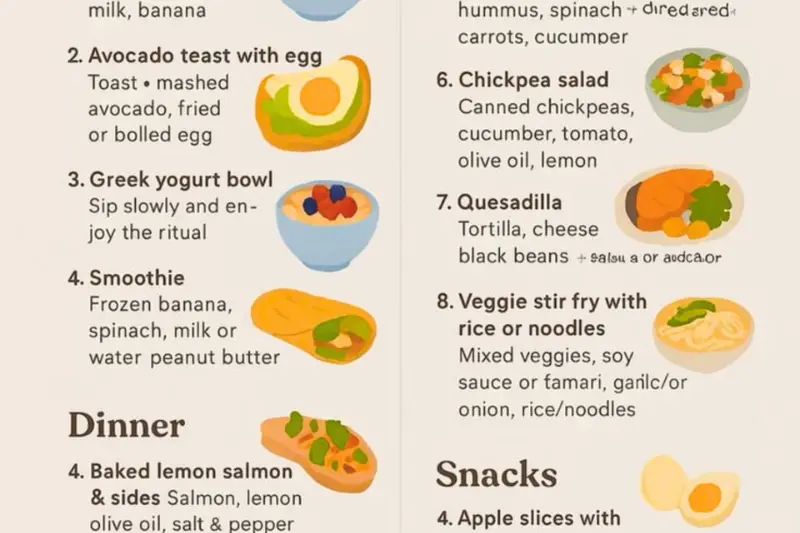
Simple meal planning is creating a guide for your daily meals, snacks, and beverages. It focuses on variety, balance, and portion control while being easy to follow. Unlike complex diet charts or expensive programs, simple meal planning is practical for beginners and can be adapted to your schedule and preferences.
Benefits of Simple Meal Planning
Saves Time
Planning meals ahead reduces last-minute decisions and unhealthy food choices.
Encourages Healthy Eating
A plan ensures your meals include protein, carbs, healthy fats, and vegetables.
Supports Fitness Goals
Whether you want weight loss, muscle gain, or overall health, meal planning complements your exercise routine.
Reduces Stress
Knowing what to eat removes the daily struggle of deciding on meals.
Steps to Start Simple Meal Planning
Step 1: Determine Your Goals
Decide whether your goal is weight loss, weight maintenance, muscle gain, or overall health.
Step 2: Make a List of Foods You Like
Include fruits, vegetables, lean proteins, whole grains, and healthy fats.
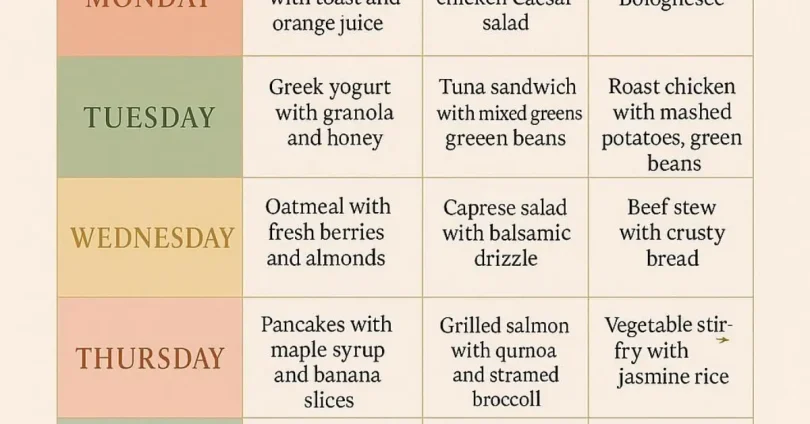
Step 3: Plan 3 Main Meals and 2 Snacks
Breakfast, lunch, dinner, and two small snacks are ideal for most beginners.
Step 4: Prep in Advance
Chop vegetables, cook grains, or prepare protein in advance to save time during busy days.
Step 5: Stay Flexible
Meal planning is a guide, not a strict rule. Swap foods when needed and enjoy variety.
Sample Simple Meal Plan
Breakfast
Oatmeal with fresh fruit and nuts
Low-fat yogurt or milk
Water or green tea
Mid-Morning Snack
A handful of almonds or walnuts
A small fruit like an apple or pear
Lunch
Grilled chicken, fish, tofu, or legumes
Brown rice or whole wheat bread
Steamed vegetables or salad
Water
Afternoon Snack
Carrot or cucumber sticks
Boiled egg or cottage cheese
Dinner
Baked or steamed protein (chicken, fish, tofu, or legumes)
Quinoa or whole grains
Green leafy vegetables
Herbal tea or water
Optional Evening Snack
A small fruit or a cup of low-fat yogurt
You may also like to read these posts:
Simple Workout Plan for Beginners to Stay Fit
Healthy Nutrition Plan for Beginners and Busy People
Meal Plan for Beginners to Eat Healthy and Stay Fit
Balanced Diet Plan for Beginners to Stay Healthy
Tips for Effective Meal Planning

Plan meals for the week to reduce stress
Use a grocery list to avoid buying unhealthy foods
Balance each meal with protein, carbs, fats, and fiber
Prep in advance to save time
Stay consistent but flexible to avoid burnout
Common Mistakes to Avoid
Skipping meals
Eating too much processed food
Not drinking enough water
Ignoring portion control
Trying to follow overly strict diets
How Long Does It Take to See Results?
Energy levels improve within 1–2 weeks
Better digestion and focus appear in 2–3 weeks
Visible changes in weight or health depend on consistency and goals
Staying Motivated
Set realistic and achievable goals
Track meals and progress
Try new healthy recipes to prevent boredom
Focus on long-term habits rather than short-term results
Frequently Asked Questions
Can beginners follow simple meal planning?
Yes, it is designed to be easy and practical for beginners.
How many meals should I plan per day?
Three main meals and two snacks are ideal.
Can I plan meals at home?
Absolutely, all meals can be prepared easily at home.
Does meal planning help with weight loss?
Yes, it helps control portions and prevents unhealthy food choices.
Can I adjust the plan for vegetarians?
Yes, replace animal proteins with legumes, tofu, beans, and dairy products.
Conclusion
Simple meal planning makes healthy eating easy and stress-free. By preparing meals in advance, balancing nutrients, and following a flexible routine, beginners can improve health, maintain energy, and achieve their fitness goals. Consistency, preparation, and variety are the keys to making meal planning a sustainable habit.